Heritage roofing systems age with poetry and accuracy. They also age with movement. Slates swell and reduce with the period, old rafters breathe, copper patinas, and mortar loosens up in the initial northwest gale of November. Dormers, perched at the merging of planes and water, take in the impact of that motion and climate. That is where flashings either gain their maintain or fall short marvelously. The distinction is rarely the headline material, and often the details: hem widths, solder top quality, tipped interfaces, and the judgment of an artisan that has rived a hundred failed joints prior to choosing how to develop the following one.
Over 3 years restoring slate, clay tile, and cedar roofing systems, I have come to rely on custom-fabricated sheet steel for dormer security. Factory supply can fix a rate factor. Customized steel fixes the roof. When the dormer lives on a heritage framework, authenticity and long life are wed issues. You have to match the language of the structure while silently surpassing the past with far better metallurgy and far better execution.
Where Dormers Fail First
Water likes an inlet and a corner, and dormers generate both. The front cheek edges and the apron-to-roof transition generally reveal the very first hairline fractures. On wood-shingled dormers, water tracks along grain and peels off paint at the sill degrees. On slate, the very first sign is a tea-colored crescent below the dormer, tarnishing copper valleys or supporting at nails. Inside, plaster flowers like a map of the Mississippi floodplain.
I maintain a mental ledger of failure settings and their timelines. On early 20th century homes with initial tinplate flashings, pinholing starts at 25 to 35 years, much faster on coastal residential properties where salt air speeds up rust. In the Midwest, galvanized steel can round up thirty years if the painter was loyal. Early light weight aluminum retrofits, preferred in the 70s and 80s, often divided at bent edges by the 15 year mark, micro-cracked by thermal biking. Incorrectly soldered copper, especially where acid change wasn't reduced the effects of or seams weren't secured prior to soldering, will certainly announce its failure with verdigris spotting and infiltration around year 20. The dormer's little globe amplifies every shortcut.
Which is why "what metal should I make use of" is the wrong very first question. The appropriate one is "exactly how will this dormer action, shed, and age for the next 60 years, and what construction selections regard that reality."
The Case for Customized: Forming Steel to Movement
Stock flashings rely upon little laps and easy bends to strike as several circumstances as possible. Heritage dormers are anything yet criterion. I have yet to fulfill a Victorian gable with cheeks that determine the same top to base. Initial woodworkers worked by sightline, not laser degree, and time includes extra personality. Custom fabrication accepts the structure as it stands. We scribe to the wonk, expand hems where wind stress is worst, and https://salvometalworks.com/product/304/ include alleviation notches so a joint is never ever fighting a twist.
There is also the simple benefit of density and metallurgy. A 16 ounce copper with a completely secured standing joint on dormer cheeks contends in a different organization than thin aluminum angle with caulk. On seaside residential properties I have actually transferred to 20 ounce copper or 0.7 mm zinc-titanium for cheeks and head flashings, often teamed with lead-coated copper where historic bespoke copper finial look favors a softer, grayer read. In towering areas, stainless steel Kind 316 for head flashings paired with copper or zinc cheeks can take misuse from wandering snow and moving ice without extending of shape. The mix matters. If a dormer sits below a large copper area, coupling it with zinc is a recipe for galvanic pain. Seasoned shops like Salvo Metal Works bring the full alloy variety and can run tiny batches with the appropriate separators, fasteners, and sealants to maintain the system pleasant over time.
Anatomy of a Dormer Flashing That Rejects to Fail
Any dormer flashing assembly lives or dies by overlapping defenses. Water that beats the initial turn should satisfy a second, then a third. I have a couple of non-negotiables that have proven themselves on heritage jobs varying from Queen Anne clifftops to Georgian terraces.
- Head flashing with an appropriate kick: The horizontal leg at the dormer head needs a raised back leg linked under the dormer frontage, and a forward drip with a crisp kick to toss water free from the siding line. On slate and floor tile roofings, I like a two-piece assembly. The back frying pan locks to a receiver that permits growth without bending the visible edge. Minimum 1 inch upstand at the wall surface, 4 inches under the roofing system covering, with a 3/8 inch tilt on the drip for positive dropping. On cedar, I expand the underlap to 6 inches because wood drinks. Cheek flashings that step and breathe: Continual cheek flashings tempt rate, however tipped flashings win the service life. Each action secures right into the home siding or masonry joint, paired with underlayment that splashes properly. Making these action in a store with indexed bend lines stops drift that obtains compounded training course by program. I go for a 2 inch vertical leg, 4 inch horizontal leg, with the step elevation matched to the course direct exposure plus a 1/4 inch poise. Where wind is a bully, we include a refined break line in the horizontal leg to stiffen the piece without thickening the profile. Apron with integrated development: The apron at the dormer front is the workhorse. On metal roofings it is a discussion in between 2 metals, which indicates slip plates or a floating cleat are mandatory. On slate and floor tile, a raggle or reglet cut into the dormer face enables the apron's upstand to rest pleased without dozens of nail penetrations. For copper, a 3/4 inch locked hem at the bottom stiffens the drip and guards against waves after ice loads. Corners that are locked, not buttered: Way too many failings start with edges "caulked and wished." I fabricate inside and outside corner items with S-locks or welts that are soldered or TIG bonded depending upon alloy. Solder is flawlessly traditional on copper, but have to be done after appropriate cleansing and neutralization. For zinc, always comply with the alloy distributor's seam recommendations and temperature guidelines. Underlayment approach that respects the roofing: Breathable underlayments for slate and ceramic tile preserve the roofing's drying capability. On early cedar that can not be interrupted, a self-adhered ice and water membrane layer is a blessing, but it must be made use of surgically to prevent capturing wetness in the assembly. The membrane is insurance policy, not a primary roof.
These components are not glamorous. They are the quiet architecture that lets a dormer discolor back into the structure, visually pure, mechanically stout.
Material Options, Truthfully Weighed
Copper stays the benchmark for heritage dormers. Its malleability lets you operate fragile accounts, and the patina ages into the roofing rather than shouting over it. In city settings, the green as a result tells a true story. The knocks on copper generally originated from theft threat and in advance cost. The first is real, though less dramatic for dormers than for valleys or ridges. The second is commonly overemphasized when you gauge life process. A 16 ounce copper dormer system, carried out correctly, will certainly last 60 to 100 years depending upon exposure.
Zinc-titanium, especially in medium-gray pre-weathered surfaces, mixes effortlessly with slate and leaded aspects. It wishes to move, so you have to detail with more pay in joints and enable development. When a specialist grumbles that zinc "oil containers," I examine the cleat spacing and the temperature level at set up. If you require zinc to behave like steel, it will certainly punish you with waves.
Lead-coated copper is a quiet hero on several historical remediations. It provides the workability of copper with a muted gray that carries less visual heat. We have used it for Customized Dormers on Georgian exteriors where brilliant copper would be flashy. Be conscious that scratches on the coating early in life will telegraph. Deal with carefully, cleat intelligently, and it will mature with sobriety.
Stainless steel really feels unromantic up until you run the numbers on snow tons and rough ice. For head flashings under heavy slide paths, I like 316 stainless with a micro grain coating, coupled with copper cheeks separated by bituminous isolators. That blend marries brute resilience with the visual language of the roof.
Aluminum has a slim but genuine lane: painted, heavy-gauge items in marine environments where maintenance is disciplined and motion is moderate. I rarely specify it for heritage dormers because the crispness of the bends and the edge memories do not resemble historical accounts along with copper or zinc. On mid-century modern with low-slope dormers, it can be part of a thoughtful palette.
Field Facts on Heritage Projects
Ideal information take a trip improperly if you overlook the jobsite's character. Old roofs are a conversation with what exists below. I have opened 1890s dormers that conceal brick nogging right behind the sheathing. I have eliminated layers of painter's canvas under shingles utilized as "underlayment" by a Depression-era woodworker. You do not march in with a fixed strategy. You examination, trace, and build the flashing approach that respects these surprises.
Mortar joints on historic stonework can be powdered sugar. If you cut tidy reglets, you may do even more damage than excellent. In those situations, I like surface-mounted counterflashings with a soft lead wedge and a reversible sealer designed for heritage work. Not every little thing needs a grinder. On timber-framed dormers, I chase after backing obstructing that will certainly hold a cleat without splitting the century-old oak. When you drive a modern-day self-tapping screw into antique heartwood, you are piercing into rock. Pre-drill, tip down your torque, and make use of fasteners that match the steel's galvanic profile.
Weather home windows also drive choice production. Soldered seams despise a chilly, wet scaffold. A proficient shop, such as Salvo Metal Works, will pre-fabricate complicated settings up so field soldering is reduced to high-control minutes. Send exact themes, and you can get cheek panels with factory-formed steps and talon tabs that snap to your cleat rhythm. Your on-site work comes to be placement and signing up with, not improvisation.
Matching Historical Character Without Fossilizing Mistakes
Conservation values request reversibility and evidence-based restoration. That does not indicate we repeat imperfections. When I find an initial constant cheek blinking put crookedly behind roof shingles butts, I log its dimension and picture it. After that I replace it with stepped items that resemble the visible lines however secure the setting up much better. The eye checks out the exact same cadence, the roof gains robust water control.
Profiles issue. On Queen Anne and Second Realm dormers, drip sides often carried a fragile grain or a lamb's tongue notch. A proficient fabricator can reproduce these in copper or zinc so the darkness reads period-correct. You are not limited to blocky returns. Personalized Finials and Custom-made Cupolas close by may draw the eye. Your dormer flashings ought to not compete with those jewels, but they need to harmonize. A narrow reveal on the apron hem, a softened corner radius, and a patina that does not shriek brand-new cash keep the roof's orchestra in tune.
On estates that lug Customized Chimney Shrouds or Customized Leader Boxes with distinct profiles, I research their seams and hems before establishing the dormer details. A 3/8 inch hem on those devices suggests a language you can echo on the dormer apron. Likewise, where Customized Roofing Vents punctuate the rear slopes, the joint rhythm can be matched on dormer cheeks for a quiet comprehensibility. The point is not to brand name a roofing system, however to make it whole.
When Snow, Ice, and Wind Beginning the Conversation
The dormer sits at the front row of winter season. In snow nation, dormer aprons often reside in the darkness line where moving drifts shear throughout edges. A blinking that makes it through New Hampshire in February utilizes thicker scale, strengthened hems, and a covert cleat timetable you can set your watch by. I have repaired greater than one apron torn like a zipper because just completions were anchored and the center floated.
Where ice dams are seasonal, air sealing at the dormer cheek and head is as vital as steel. Flashings can not compensate for warmth loss that thaws snow into water that looks for the path of the very least resistance. Still, a well-detailed head blinking with an extensive underlayment guard gets you seasons to resolve insulation.
Wind presses at the dormer face and tries to lift the uphill edge at the cheeks. A small drip kick, 10 to 15 levels, can make the pressure remove from the surface and decrease chattering. On a coastal Victorian, we when included a barely visible return layer on the apron hem that tensed it and choked wind vibration. Five winters later, the paint on the nearby millwork told the story: no scouring, no salt whip.
Custom Snow Guards put smartly above and to the sides of dormers can soften the avalanche effect that rips aprons and damages cheek flashings. They are not attractive second thoughts. Spread them to disrupt the slide, not gather it in a heavy band. Where the roofing already showcases stylish metalwork, coordinate guard styles so they reside in the exact same family members as existing Personalized Dormers or finials.
Fabrication That Appreciates the Metal's Nature
Shops that function heritage flashings learn to slow down. Copper solidifies with work. If you bend, rebend, and fine-tune, you are cooking spring into parts that need to lay level. That is why I lean on in-depth themes. Take your time on site to pattern cheeks and aprons in hefty paper or slim plywood. Mark low and high points, keep in mind any kind of non-orthogonal angles. The store can then reduce, scratch, and pre-fold with very little rework.
Soldering is a craft within a craft. Acid change that is unclean welcomes corrosion tracks. Excess warm fatigues joints and leaves a visible swelling. Our ideal outcomes originate from methodical cleanliness: Scotch-Brite, alcohol, exact flux, also heat, and quenching where ideal. On attractive pieces near eye degree, we occasionally back-seam and leave the face free of solder for a perfect line.
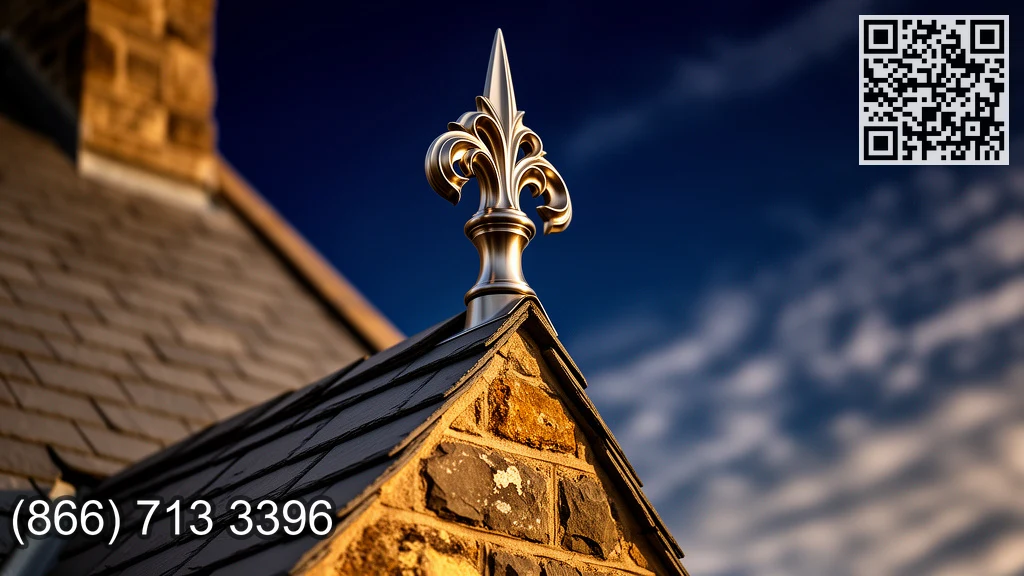
If you're integrating with various other metal elements, bring the full roofing system combination into the conversation. A home already bring Custom-made Finials with a warm patina will certainly be ill-served by plain, bright aprons. Coordinate finishes and patination schedules. Salvo Metal Works, to name a few, can pre-weather copper and zinc to the area of your existing metalwork, so the dormer does not stick out for 2 periods prior to it relaxes.
Installation Self-control from Eave to Apex
The best store work can be reversed in an afternoon by careless attachment or mis-sequencing. I demand dry fitting every item prior to any type of fastener goes home. Slate and tile depths vary. Wedges or under-shims may be required to keep the flashing plane true so water does not cradle.
Nailing and screwing is not brute force. Usage copper or stainless bolts matched to the metal, and quit prior to the steel dimples. Cleats must be established on a rhythm, commonly 6 to 8 inches on facility for aprons in modest environments, tighter where wind splits. On cheeks, set cleats to allow a little slip, after that lock steps nicely into joints or behind exterior siding. Every penetration desires a story: why it exists, exactly how it is safeguarded, and who will certainly locate it three decades from now without cursing.
Sealants, if made use of, should be reversible and appropriate to the substratum. Butyl is a silent good friend under a hem or at a surprise lap. Polyurethanes are excessive used and ruthless on heritage fabric. If you reach for a gun, ask if a better hem or an additional inch of overlap might do the job first.
Real Tasks, Genuine Lessons
On a 1912 Tudor with hand-pressed clay ceramic tiles, the dormers had actually endured two generations of patching. We drew them apart in March and located the anticipated compost of underlayment and the unanticipated luxury of original drawings in the attic room showing a lead apron. Copper was the best response for longevity, yet the appearance of noodle to the owners. We produced lead-coated copper aprons with a slightly thicker hem, coupled with 16 ounce copper cheeks stepped to the tile exposure. Salvo Metal Works formed the head flashings with a soft grain the mason duplicated in the rock's mortar account. Five years on, assessment shows the seams tight, the aging softening, and not a solitary winter season scuff.
Another work on a Shingle Style seaside home showed us humbleness. We described perfect copper flashings, after that found out by hand that overseas gusts at the headland were pushing spray backwards under the cheeks. We returned and added a virtually unseen secondary baffle in the cheek underlayment, simply a 1/2 inch break in plane. It cured the issue, and nobody would certainly identify it without a knife and pry bar. Often the atmosphere writes the last line of the spec.
Integrating Dormers right into a Cohesive Metal Story
Heritage roofing systems frequently lug a family of customized metalworks. Custom Smokeshaft Shrouds crown the massing, Personalized Cupolas send out light right into upper halls, and Personalized Roofing system Vents breathe the attic room. When defining dormer flashings, I look throughout that family. If the cupola louvers are bordered with a fine 1/4 inch return, I echo that on the dormer apron hem. If the chimney shadow uses riveted straps, I could repeat rivets as a very discreet ornamental fastener on available dormer deals with that the owners can appreciate up close from a balcony.
Custom Leader Boxes and downspouts march down the exterior with a tempo of joints and straps. When a dormer rests over one, straightening the apron's drip darkness with the leader's centerline can create a visual axis that makes the make-up really feel unavoidable. The goal is harmony, not pastiche. You are composing with feature as your metronome.
Maintenance That Prolongs a Treasure's Life
Nothing we develop is really maintenance-free, and heritage roofing systems deserve mild, regular attention. A dormer blinking assembly that is examined every springtime for particles at the cheeks, every succumb to sealer health at counterflashing joints, and every few years for fastener convenience will return that interest with years of service.
Light washing to eliminate salts on seaside homes is compassion to copper and zinc. Stay clear of power washing machines. A soft brush, tidy water, and persistence maintain the aging and keep joints clear. If you need to paint adjacent woodwork, mask metal very carefully. Alkyd drips on pre-weathered zinc are suffering to remove without ghosting.
When something looks amiss, stand up to need to smear caulk. Document with photos, call the artisan or producer, and map the reason. The most effective fixings are tiny, early, and principled.
Working with the Right Fabricator
A shop that comprehends heritage job is not simply bending metal. They are converting style right into seams and hems. I look for dialogue in the store stage. When I send a design template, I desire inquiries regarding expansion, cleat placement, and site sequencing. Salvo Metal Works has actually made repeat telephone calls since they meet that requirement, generating Customized Dormers and companion elements that show up with the appropriate resistances, the correct alloys, and the details that make installation seem like completing a sentence a person began beautifully.
The hallmark of an excellent partner is additionally restraint. If a shop pushes just one steel, one joint, or one profile, I stress. Each roofing is its very own brief. The best makers carry copper, zinc, lead-coated copper, stainless, and heavy-gauge aluminum, and they understand when each sings or sulks.
A Last Word from the Scaffold
When you stand degree with a dormer's eyes, you appreciate just how much problem and charm they add to a roof covering. They bring light right into put areas, break up aircrafts, and provide character that makes a home feel resided in and enjoyed. They also gather water, examination joints, and punish neglect. Custom metal construction is not high-end for its own sake right here. It is the determined, sturdy response to a set of forces that do not reduce corners.
Build the head blinking with a confident kick. Tip the cheeks with technique. Anchor the apron to move when it needs to and persevere when it should. Match the metal to the location, the neighbors, and the tale your house is already telling. Coordinate with the other custom-made components on the roof covering, from finials to leader boxes and vents, so the entire set feels composed instead of cobbled.
Get those selections right, and you will certainly not consider the dormer flashings again for a long time. The roof will shed, the patina will certainly grow, winter season will holler after that leave, and the dormers will certainly just maintain looking out, dry-eyed and dignified.
Salvo Metal Works
Office - (630) 857-3631
Toll Free- (866) 713-3396
[email protected]
566 W 5th Ave, Naperville, IL 60563
 Ask ChatGPT
 Ask Grok
 Ask Perplexity
 Ask Claude
 Ask Google AI
 Ask You